
PSA Nitrogen Plants
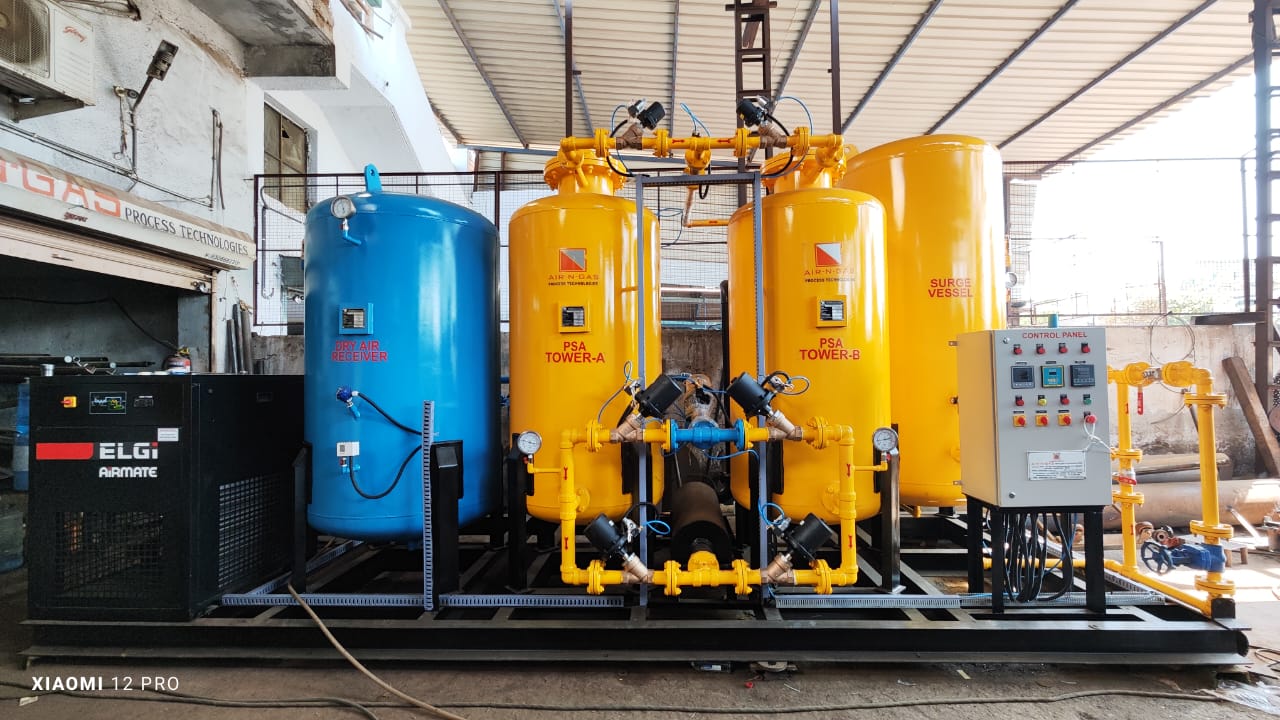
PSA Nitrogen PlantsIn today’s industrial world, nitrogen gas plays a vital role across various sectors from food packaging to electronics manufacturing. One of the most efficient and cost-effective methods for producing nitrogen gas is through a PSA Nitrogen Plant, also known as a Pressure Swing Adsorption Nitrogen Plant.
If you're considering investing in nitrogen generation technology, understanding how a PSA nitrogen generator works and the benefits it offers is crucial.
In this guide, we’ll explore the inner workings of a nitrogen gas plant, the benefits of using a PSA nitrogen system, and why a nitrogen generation unit is essential for industrial success. We’ll also cover the most frequently asked questions regarding PSA nitrogen machines.
View also plant:
What is a PSA Nitrogen Plant?
A PSA nitrogen plant, or Pressure Swing Adsorption Nitrogen Plant, is an on-site nitrogen generation unit that uses the pressure swing adsorption process to separate nitrogen gas from the surrounding air. It is a reliable and energy-efficient way of producing high-purity nitrogen.
This PSA nitrogen system consists of two adsorption towers filled with a carbon molecular sieve (CMS). These towers alternate between pressurization and depressurization cycles to continuously generate nitrogen gas while adsorbing oxygen and other impurities.
How Does a PSA Nitrogen Generator Work?
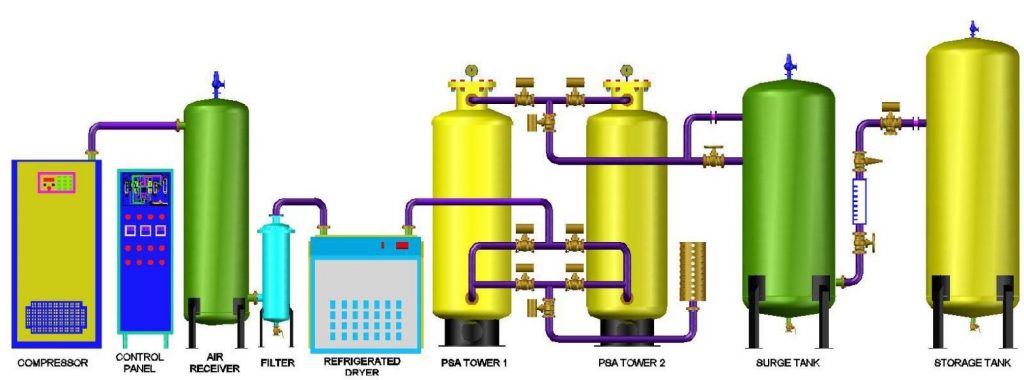
The working principle of a PSA nitrogen generator revolves around pressure swing adsorption (PSA) technology. Here's a step-by-step breakdown:
- Air Compression: Ambient air is compressed using an air compressor.
- Air Filtration: The air passes through filters to remove moisture, dust, and oil.
- Adsorption Process: The clean, dry compressed air enters the adsorption tower containing CMS. Oxygen, carbon dioxide, and water vapor are adsorbed by the CMS, while nitrogen passes through.
- Switching Towers: When one tower gets saturated with oxygen, the system switches to the second tower, while the first regenerates by releasing the adsorbed gases.
- Nitrogen Collection: The nitrogen gas is collected in a buffer tank, ready for industrial use.
By alternating between the two towers, the PSA nitrogen plant ensures a constant supply of nitrogen gas without interruption.
Advantages of PSA Nitrogen Systems
Choosing a PSA nitrogen system over traditional methods of nitrogen supply offers several compelling benefits:
- On-Demand Nitrogen Supply: With a PSA nitrogen machine, there is no dependency on gas cylinders or liquid nitrogen deliveries. You generate nitrogen on-site, whenever needed.
- Cost-Effective: The operational cost of a PSA nitrogen generator is significantly lower than buying bottled nitrogen. Once installed, the running cost is primarily electricity.
- High Purity Nitrogen: A well-designed industrial nitrogen generator can produce nitrogen with purities ranging from 95% to 99.999%, suitable for a wide array of applications.
- Eco-Friendly: The system uses ambient air, a free and renewable resource, without harmful emissions, making the nitrogen gas plant environmentally sustainable.
- Minimal Maintenance: A PSA nitrogen generator has few moving parts, which means low wear and tear, resulting in minimal maintenance costs.
Applications of PSA Nitrogen Plants in Industries
PSA nitrogen systems are used in a wide variety of industries due to their versatility and efficiency:
- Food and Beverage Industry:
- Nitrogen is used for food packaging to displace oxygen, thereby extending shelf life.
- Used in wine and beer bottling for blanketing.
- Pharmaceutical Industry:
- Ensures an inert atmosphere during production processes.
- Prevents oxidation and contamination.
- Electronics Manufacturing:
- Provides a moisture-free, inert environment for soldering and component assembly.
- Metal Industry:
- Used for annealing, sintering, and heat treatment processes to prevent oxidation.
- Oil & Gas:
- Nitrogen is used for purging pipelines and inerting storage tanks.
- Chemical Plants:
- Maintains an oxygen-free environment to avoid unwanted chemical reactions.
Key Components of a PSA Nitrogen Generator
A high-performing PSA nitrogen machine consists of the following major components:
- Air Compressor: Compresses ambient air for processing.
- Air Dryer: Removes moisture from compressed air.
- Carbon Molecular Sieve (CMS): The heart of the system that adsorbs oxygen and other impurities.
- Adsorption Towers: Typically two towers that operate in cycles for continuous generation.
- Buffer Tank: Stores the produced nitrogen for stable output.
The design and efficiency of each component directly affect the performance and output purity of your nitrogen generation unit.
Choosing the Right PSA Nitrogen Plant for Your Needs
When selecting a PSA nitrogen system, consider the following factors:
- Flow Rate Requirements: Choose a capacity that matches or exceeds your peak nitrogen demand.
- Purity Levels: Different applications require different purity levels—ensure your system can meet your specific requirements.
- Footprint: Depending on available space, choose a compact or modular design.
- Automation and Control: Look for a PSA nitrogen generator with an intelligent control system and remote monitoring features.
Maintenance and Lifespan of PSA Nitrogen Systems
One of the biggest advantages of a PSA nitrogen plant is its low maintenance requirements. Key maintenance practices include:
- Regular filter changes
- Periodic CMS replacement (every 5-7 years)
- System diagnostics and calibration
With proper maintenance, a PSA nitrogen machine can last for over 15 years, offering excellent ROI.
Cost of Installing a PSA Nitrogen Plant
The cost of a PSA nitrogen generator depends on:
- Desired flow rate
- Nitrogen purity
- Custom features and automation
- Installation and commissioning services
While the upfront cost may seem high, the long-term savings from eliminating gas cylinder purchases and reducing downtime make a nitrogen gas plant a financially sound investment.
Frequently Asked Questions (FAQs)
- Q1: What is the purity level of nitrogen generated by a PSA nitrogen system?
- A: Most PSA nitrogen machines produce nitrogen with 95% to 99.999% purity, depending on the configuration and design.
- Q2: Is a PSA nitrogen generator better than buying bottled nitrogen?
- A: Yes, it provides continuous, on-demand nitrogen at a much lower operational cost. It also eliminates the need for storage and transport.
- Q3: Can a PSA nitrogen plant run 24/7?
- A: Absolutely. A well-maintained PSA nitrogen generator is designed for continuous operation around the clock.
- Q4: What industries benefit most from PSA nitrogen plants?
- A: Food and beverage, pharmaceuticals, metal processing, electronics, chemicals, and oil & gas industries are among the top users of industrial nitrogen generators.
- Q5: How long does it take to install a PSA nitrogen system?
- A: Installation typically takes 2–5 days depending on the complexity of the system and site conditions.
- Q6: How often do I need to replace the CMS in a PSA nitrogen generator?
- A: CMS usually lasts 5–7 years with proper air filtration and maintenance.
- Q7: Are PSA nitrogen plants environmentally friendly?
- A: Yes. They use ambient air and generate no harmful emissions, making them an eco-friendly choice.