
Low Pressure Dryer: 7 Powerful Benefits of Choosing a High-Performance Low Pressure Dryer
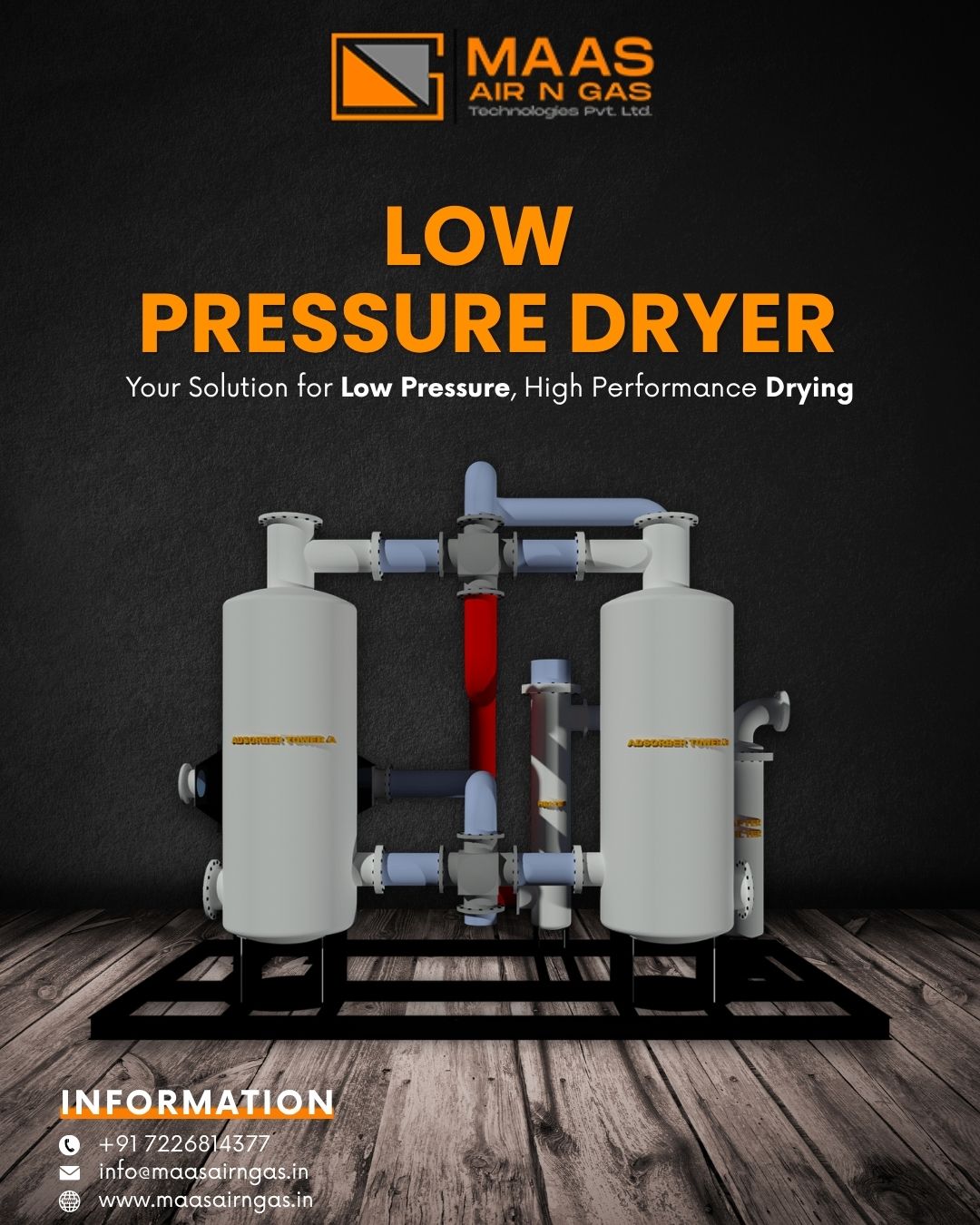
Low-Pressure Dryer: A Reliable Solution for Efficient Industrial Drying
Table of Contents
- What Is a low-pressure dryer?
- Why Moisture Control Matters in Low-Pressure Air Systems
- How a Low-Pressure Dryer Works
- Key Features of a Low-Pressure Dryer
- Benefits of Installing a Low-Pressure Dryer
- Industrial Applications of Low-Pressure Dryer Systems
- How to Select the Right Low-Pressure Dryer
- Why Choose Air-N-Gas for Low-Pressure Dryer Solutions
- FAQs on Low-Pressure Dryer
- Conclusion
Low-Pressure Dryer: A Reliable Solution for Efficient Industrial Drying
A low-pressure dryer is an essential part of many industrial compressed air and gas systems where moisture removal is critical but operating pressure remains lower than standard high-pressure applications. In industries that rely on dry, clean, and stable compressed air, the presence of moisture can quickly create performance issues, corrosion, product contamination, and unplanned maintenance. That is why investing in a dependable Low Pressure Dryer is not just a technical decision—it is a strategic one for long-term productivity and equipment protection.
At Air-N-Gas, industrial air and gas treatment solutions are designed to meet the real-world needs of manufacturers, process industries, utility systems, and specialized applications where low-pressure compressed air must remain dry and consistent. A properly engineered Low Pressure Dryer helps maintain the required dew point, prevents moisture carryover, protects downstream instruments, and improves overall system reliability. Whether the air is being used for pneumatic conveying, ash handling, instrumentation, process air, or other plant operations, moisture-free air plays a direct role in stable performance and reduced operating risk.
What Is a low-pressure dryer?
A Low-Pressure Dryer is a compressed-air drying system specifically designed to remove water vapor and moisture from compressed air or gas streams operating at comparatively lower pressures. In many industrial systems, even when pressure is lower than typical plant air pressure, moisture remains a serious concern. As air cools, the water vapor it contains condenses into liquid water. If this moisture is not removed in time, it can enter pipelines, valves, actuators, pneumatic tools, instruments, and process equipment.
The purpose of a Low-Pressure Dryer is to ensure that air supplied to downstream applications remains dry enough to avoid condensation, corrosion, clogging, microbial growth, freezing, and damage to sensitive process components. In practical terms, the dryer acts as a protection layer for the entire compressed air network. It improves the quality of air, extends equipment life, and supports uninterrupted plant operation.
A well-designed Low-Pressure Dryer is especially valuable in applications where compressed air is used continuously and system reliability matters more than short-term cost savings. Industrial facilities that ignore moisture control often end up spending much more on pipeline replacement, valve maintenance, production losses, and product quality issues than they would have spent on installing the right dryer from the start.
Why Moisture Control Matters in Low-Pressure Air Systems
Moisture is one of the most common and most underestimated problems in compressed air systems. Atmospheric air naturally contains water vapor. When this air is compressed, the concentration of moisture increases. As the compressed air cools in pipelines or storage vessels, that moisture condenses into liquid water. This is where trouble begins.
In low-pressure systems, many users assume that moisture is less harmful because operating pressure is lower. In reality, moisture can be just as destructive. Wet compressed air can corrode piping from the inside, damage pneumatic equipment, create sludge in valves, reduce the life of seals, contaminate products, and affect sensitive operations in pharmaceuticals, chemicals, food processing, electronics, and manufacturing. Government and industry guidance on compressed-air systems also emphasizes that moisture control and correct dryer selection are fundamental to reliable compressed-air performance and energy efficiency.
A low-pressure dryer addresses this issue by reducing the moisture content before the air reaches the application point. This keeps the air system stable, protects downstream machinery, and ensures that operations remain smooth even under demanding industrial conditions. In plants where downtime is expensive, the dryer becomes one of the most valuable supporting components in the entire compressed air setup.
How a Low-Pressure Dryer Works
The exact working principle of a Low-Pressure Dryer depends on the dryer design, but the objective remains the same: remove moisture from the compressed air stream before it causes problems downstream.
In a typical industrial setup, wet compressed air enters the dryer after compression and pre-filtration. The dryer then reduces the moisture level by cooling, adsorption, or another drying method, depending on the application and required dew point. Once moisture is separated or adsorbed, the dry air exits the system and moves toward the application line.
In many low-pressure drying systems, air first passes through a filtration stage to remove dust, oil aerosols, and bulk moisture. This protects the internal drying components and improves overall performance. The air is then treated through a drying process designed to bring down the pressure dew point to an acceptable level. The collected moisture is drained out of the system, and the treated air is delivered for plant use.
The final result is simple but highly important: dry compressed air with lower risk of condensation, lower maintenance burden, better product quality, and improved equipment life.
Key Features of a Low-Pressure Dryer
A quality low-pressure dryer is not just about removing moisture. It is about doing so consistently, efficiently, and safely in industrial operating conditions. A well-engineered system typically includes robust vessels, quality valves, dependable filtration, efficient moisture removal, and a design that minimizes pressure drop.
The most effective low-pressure dryer systems are built for continuous operation and easy maintenance. They are designed to handle varying load conditions while maintaining drying performance. In demanding industrial environments, construction quality matters as much as drying performance. Durable components, corrosion-resistant materials, optimized airflow design, and reliable automation all contribute to long-term value.
Another important feature is energy-conscious operation. An efficient dryer should help remove moisture without creating unnecessary energy losses in the compressed air system. Excessive pressure drop, poor drainage, or incorrect sizing can increase the load on compressors and raise operating costs. That is why dryer design, selection, and integration with the rest of the system are critical.
Benefits of Installing a Low Pressure Dryer
The biggest advantage of a Low Pressure Dryer is protection. It protects the compressed air network, protects downstream equipment, and protects production quality. But the benefits go much further.
First, a low-pressure dryer helps prevent corrosion in pipelines, receivers, and air distribution lines. Moisture is one of the primary causes of internal rusting and contamination in compressed air systems. By keeping the air dry, the dryer significantly extends the life of the air network.
Second, it improves the reliability of pneumatic instruments, actuators, control valves, and process equipment. Moisture in air lines can lead to sluggish operation, erratic instrument behavior, and premature component failure. Dry air improves performance consistency.
Third, a low-pressure dryer supports better product quality. In industries where compressed air comes into contact with packaging, powders, process equipment, or sensitive manufacturing environments, moisture contamination can create major quality problems. Dry air helps maintain cleanliness and process stability.
Fourth, it reduces maintenance costs. When moisture is controlled properly, there is less corrosion, fewer blockages, less wear on seals and valves, and fewer breakdowns. This means lower repair costs and fewer production interruptions.
Fifth, a low-pressure dryer contributes to system efficiency. Moisture-related failures often lead to air leaks, valve malfunction, and operational inefficiencies. A dryer supports stable system performance and reduces avoidable downtime.
Industrial Applications of Low Pressure Dryer Systems
A Low-Pressure Dryer is used across a wide range of industries where compressed air or gas must remain dry at relatively low operating pressure. In power plants, low-pressure air is often used in ash handling and other utility processes where moisture can create blockages and operational problems. In cement plants, dry air helps maintain smooth conveying and process stability. In chemical and pharmaceutical industries, moisture-free air supports hygiene, product quality, and reliable instrumentation.
Food processing units also depend on clean and dry compressed air because moisture can affect packaging quality, shelf stability, and equipment hygiene. In manufacturing plants, low-pressure air may be used in machine operations, automation, air knives, and cleaning systems where wet air would create inefficiency or contamination.
Wherever compressed air is part of the production process, a Low Pressure Dryer adds value by improving air quality and protecting the system from moisture-related damage. That is why industrial buyers increasingly look beyond just “air dryers” and specifically focus on dryer performance, dew point stability, pressure compatibility, and long-term reliability.
How to Select the Right Low Pressure Dryer
Choosing the right Low Pressure Dryer requires more than comparing prices. The dryer must be selected according to actual operating conditions. Airflow requirement, inlet pressure, inlet temperature, ambient temperature, desired dew point, installation environment, and downstream application all influence the correct dryer size and design.
If the dryer is undersized, it may fail to remove enough moisture under full load. If it is oversized without proper system planning, the investment may not be optimized. The best approach is to evaluate the system as a whole—compressor, receiver, filters, piping, air consumption pattern, and required air quality level.
This is where experienced manufacturers matter. A supplier that understands industrial process conditions can recommend a Low Pressure Dryer based on performance rather than generic catalog assumptions. The result is better reliability, better efficiency, and lower lifecycle cost.
For general compressed-air drying guidance and system efficiency principles, industrial users often refer to the U.S. Department of Energy compressed air sourcebook, which explains how moisture, dew point, dryer type, and system conditions affect dryer performance. U.S. Department of Energy compressed air sourcebook
Why Choose Air-N-Gas for Low Pressure Dryer Solutions
Choosing the right dryer is important, but choosing the right manufacturer is equally important. Air treatment equipment performs best when it is designed with actual plant conditions in mind, and that is where Air-N-Gas offers a strong advantage.
Air-N-Gas manufactures a broad range of industrial air and gas solutions, including air dryers, gas generators, and related process systems. The company presents itself as an ISO 9001 certified manufacturer with experience in adsorption-based gas separation systems, compressed air dryers, and industrial gas handling solutions. Its product range includes heatless dryers, internally heated dryers, HOC dryers, split flow no purge loss dryers, blower regenerated dryers, and Low Pressure Dryer systems, which allows buyers to choose a solution aligned with process needs rather than forcing a one-size-fits-all approach.
Air-N-Gas is a practical choice for buyers who want industrial support beyond just equipment supply. For many businesses, dryer performance depends not only on the machine itself but also on sizing, integration, commissioning, and after-sales support. A supplier that understands plant air quality requirements, operating pressure, dew point expectations, and maintenance realities can create better long-term value than a seller focused only on upfront cost.
If your facility is facing moisture issues, inconsistent air quality, corrosion in pipelines, or recurring pneumatic failures, investing in a properly designed Low Pressure Dryer from an experienced manufacturer can deliver measurable operational improvement.
FAQs on Low Pressure Dryer
1. What is a low-pressure dryer used for?
A low-pressure dryer is used to remove moisture from compressed air or gas systems operating at lower pressures. It helps prevent corrosion, contamination, valve damage, and moisture-related failure in downstream equipment.
2. Why is a low-pressure dryer important in industrial plants?
It is important because wet compressed air can damage pipelines, pneumatic tools, instruments, and production systems. A Low Pressure Dryer protects equipment, improves air quality, and reduces downtime.
3. Which industries use a Low Pressure Dryer?
Industries such as power, cement, pharmaceuticals, chemicals, food processing, engineering, and general manufacturing commonly use Low Pressure Dryer systems where dry air is essential for smooth operations.
4. How do I choose the right Low Pressure Dryer?
The right Low Pressure Dryer should be selected based on airflow, operating pressure, inlet temperature, ambient conditions, desired dew point, and the sensitivity of the application using the air.
5. Can a low-pressure dryer reduce maintenance costs?
Yes. By removing moisture from the compressed air system, a Low Pressure Dryer helps reduce corrosion, blockages, valve failures, and equipment wear, which lowers maintenance and repair costs over time.
Conclusion
A Low-Pressure Dryer is not just an accessory in a compressed air system—it is a core reliability component for industries that cannot afford moisture-related inefficiency, contamination, or equipment damage. Dry compressed air improves process consistency, protects valuable equipment, supports product quality, and reduces the long-term cost of maintenance and downtime. For facilities using low-pressure compressed air in critical operations, installing the right Low Pressure Dryer is one of the smartest ways to improve system performance and operational stability.
If you are looking for a dependable low-pressure dryer manufacturer in India, Air-N-Gas offers industrial air drying solutions designed for performance, durability, and application-focused results. With the right system design and the right drying technology, your plant can achieve cleaner air, safer operation, and more reliable production.